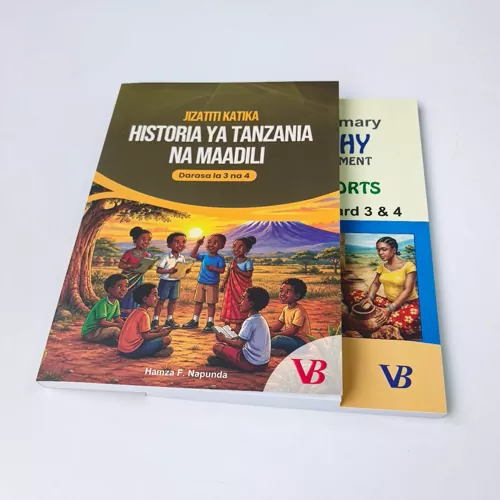

2026 Global Children's Book Market Trends: New Opportunities for Printing Companies
2026 Overseas Children's Book Printing Order Guide: Matching Capacity to Picture Books, Leveled Reading, and STEAM Early Learning
Executive Summary
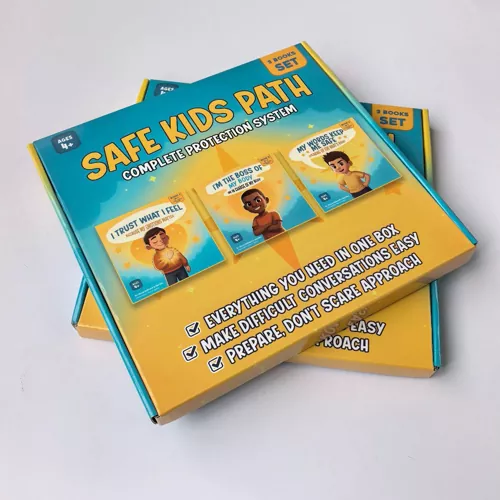
The overseas children's book market is undergoing structural differentiation: picture books remain the largest base, but growth has shifted to leveled reading and STEAM early-learning categories. With online channels now accounting for more than half of sales, print orders have fractured from "long-run, low-frequency" into "short-run, high-frequency, small-batch, multi-batch" forms. For Chinese printers, the real opportunity is not competing with giants on scale, but using small-batch rapid-response capability, environmental and safety process certification, and differentiated finishing for niche categories to capture orders that large plants won't take and small plants can't handle. This article combines market data with process requirements to offer actionable order-acquisition recommendations.
I. The Overseas Children's Book Market: A Stable Base with Growth in "Functional" Categories
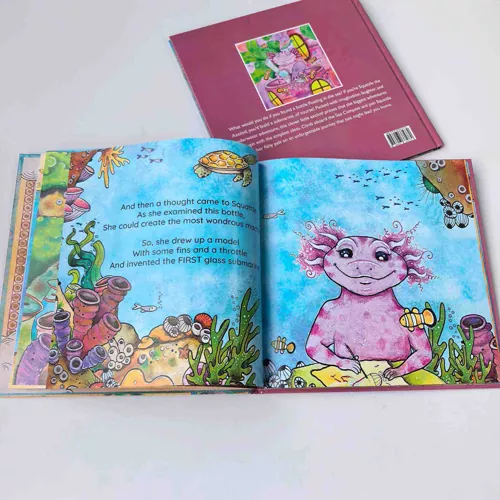
Picture books remain the ballast, but growth is steady. In the 2025 Chinese children's book market, picture books hold the largest share; in North America, picture books are likewise the largest segment, with a 2025 market size of approximately USD 3.577 billion, projected to reach USD 4.248 billion by 2034 at a CAGR of about 1.96%. Demand for picture book printing is stable, but competition is intense and margins continue to compress.
The real growth comes from categories with stronger "educational function." In North America, educational children's books are forecast as the fastest-growing segment; in China, early learning books lead growth. At the category level, STEM/STEAM children's book sales in North America grew 16.3% year-on-year in 2025, with coding primers up 24.1% and climate science themes up 19.7%. Although leveled reading lacks standalone market-size data in the search results, as a core format of educational publishing it aligns closely with the trend of "rising demand for age-appropriate content."
Direct implication for printers: Picture book orders are judged on color reproduction and binding quality, whereas STEAM and leveled reading orders place more weight on structural specifics—lift-the-flap pages, mechanical pages, sticker pages, interactive components, and thin multi-volume sets aligned with leveled systems. The latter involve more complex printing and finishing, and offer larger margin space.
II. How Online Sales Have Changed the Print Order Structure
Online channels now account for half of children's book sales. In North America, online platforms contribute 51.2% of children's book sales. This shift has had three irreversible effects on the printing side:
First, first print runs have fallen off a cliff. Average first print runs for North American children's books dropped from 5,400 copies in 2020 to 3,200 in 2025. Traditional publishers no longer dare bet on large first printings, instead testing with small batches and rapidly reprinting based on sell-through data. Printers that still use "10,000 copies minimum" as an order threshold will systematically miss a large volume of orders.
Second, print-on-demand has moved from "supplement" to "infrastructure." The global print-on-demand publishing market is expected to maintain a CAGR of 8.7% from 2026 to 2032. Lulu platform data shows that its top five AI-personalized children's book customers alone sold more than 167,000 customized children's books in one year, spread across 124,000 orders—averaging fewer than 1.4 copies per order. Traditional offset printing simply cannot handle this "every copy different" order form.
Third, the cost crossover point between short-run and ultra-short-run is moving up. The cost break-even between offset and digital printing for full-color children's books is roughly between 500 and 1,000 copies. This means orders below 500 copies have a natural advantage in digital printing; the 500–1,000 range depends on the plant's digital equipment efficiency and imposition capability. Printers need to build a cost-controlled short-run production process in this range, rather than simply rejecting orders or taking them at a loss.
III. Capability Building for Printers: Small Batches, Safe Materials, Finishing Differentiation
3.1 The Core of Small-Batch Capability Is Not "Can Print" but "Can Switch Jobs Without Losing Money"
The profit killer for small-batch orders is make-ready time and paper waste. Taking short-run children's book orders requires: matching digital printing equipment (especially coated-paper inkjet or toner devices) with inline perfect binding/saddle stitching finishing; automated job ticket processing to reduce manual proofing and imposition time; flexible management of paper inventory, maintaining safety stock of common children's book text papers (120–170gsm) and cover board. Industry data shows book POD CAGR of about 15%, but at least half of the increment is eaten by price wars. Small-batch capability without efficiency advantages equals chronic loss.
3.2 Environmental and Safety Processes: A Market Entry Threshold for Export Orders, Not a Bonus
For children's books sold in Europe and America, safety compliance is a legal requirement. The US market applies CPSIA, strictly limiting lead and phthalate content; the EU market applies EN-71 (especially Part 3), testing heavy metal migration. Printers need to be able to demonstrate to customers:
- Inks: Soy-based inks have become the standard configuration for responsible children's book printing—low VOC, no irritating odor.
- Paper: FSC-certified paper is a basic requirement for publishers' sustainable sourcing, especially among Nordic and North American customers.
- Adhesives and lamination: Water-based adhesives, formaldehyde-free binders; lamination must be confirmed free of restricted plasticizers.
Rounded-corner processing is a mandatory safety feature for early-learning children's books. Board books typically require R5mm or R10mm rounded corners to prevent sharp edges from cutting. Sticker pages require consideration of adhesive safety and removability. These processes are not complex, but they require standardized die-cutting tooling and supporting finishing inspection workflows. Plants with these capabilities can differentiate themselves from competitors who "only know how to print books" when quoting.
3.3 An Easily Overlooked Profit Point: Interactive Components and Irregular Finishing
STEAM early-learning books and early-learning interactive books often include lift-the-flap pages, pull-tabs, spinners, sticker pages, and touch-and-feel texture pages. These processes cannot be completed on fully automated lines and require semi-automatic or manual finishing stations. Large plants disdain them for low efficiency; small plants lack the quality control to handle them. For mid-sized printers, setting up a flexible production line dedicated to interactive children's book finishing may be a more pragmatic investment direction than buying a large offset press.
IV. Order-Acquisition Recommendations Based on Capacity
The following offers differentiated recommendations by plant type; readers can match according to their own equipment.
Type A: Mid-Sized Plants with Digital Printing + Inline Perfect Binding
Primary direction: Leveled reading thin-volume sets + library distribution short-run orders.
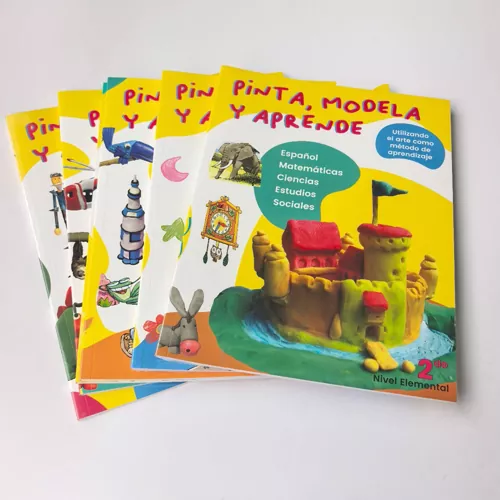
Leveled reading is characterized by few pages per book (typically 16–32 pages), many volumes, and set sales. A leveled reading set may contain 20–50 thin volumes, each with different content but uniform specifications. Such orders are uneconomical for offset (low per-volume run) and not cost-effective for pure digital (total volume is considerable). The best fit is a hybrid process of digital-printed text + offset-printed covers, or high-speed inkjet web equipment for inline production. The North American library distribution market has already seen a "print-on-demand + short-run" model supplying newly acquired titles, with average delivery time shortened to 4.2 days, indicating that short-run rapid delivery is becoming a normal requirement in the library channel.
Pitch: "50-copy minimum, 7-day delivery, each copy can have different content, FSC paper + soy ink standard."
Type B: Traditional Plants Dominated by Offset with Die-Cutting and Hardcover Capabilities
Primary direction: Hardcover picture books + board books + interactive mechanical books.
Hardcover and board book picture books remain sensitive to offset economies of scale. Full-color board books (6×6 inches, 20 pages, 350gsm) cost about USD 2.30 per copy at 500 copies, dropping to USD 1 at 5,000+ copies. If you can take 500–2,000 copy board book orders while possessing rounded-corner die-cutting capability, you can enter a middle ground ignored by large plants and admired by small ones. Interactive mechanical books (lift-the-flap, pull-tabs) require manual or semi-automatic finishing; it is recommended to configure a 5–10 person flexible finishing team dedicated to assembly and quality inspection of such orders.
Pitch: "Board book rounded corners R5/R10 optional, manual lift-the-flap assembly, CPSIA/EN-71 material declarations complete."
Type C: Small Digital Quick-Print Shops / Startup Plants
Primary direction: Personalized customized children's books + sample/proofing services.
Personalized children's books (child's name customization, character customization) are emerging as a visible niche market. Order data for AI-driven personalized children's books on the Lulu platform indicates that C-end consumers are willing to pay a premium for "uniqueness." Such orders are not cost-sensitive per copy, but place extremely high demands on delivery speed and interface friendliness. Small plants can integrate APIs or simple ordering systems to offer "one-copy minimum, 48-hour shipping" customized children's books. Another direction is providing proofing and small-batch trial production services for publishers and independent authors, binding customers' subsequent bulk orders with low-threshold short-run capability.
Pitch: "One-copy minimum, customized name/cover, 48-hour shipping, 3-day proofing."
Conclusion
Overseas children's book printing orders are migrating from "large-batch, few-variety" to "small-batch, multi-variety, high safety standards." This trend demands not "bigger" printers but more flexible ones that understand compliance and can handle non-standard processes. Picture books hold the base, leveled reading and STEAM early learning provide incremental growth, online channels force short-run capability, and safety processes determine whether one can enter the European and American supply chain. Finding one's position in the "batch–process–compliance" triangle is more likely to survive and profit in 2026 than blind capacity expansion.